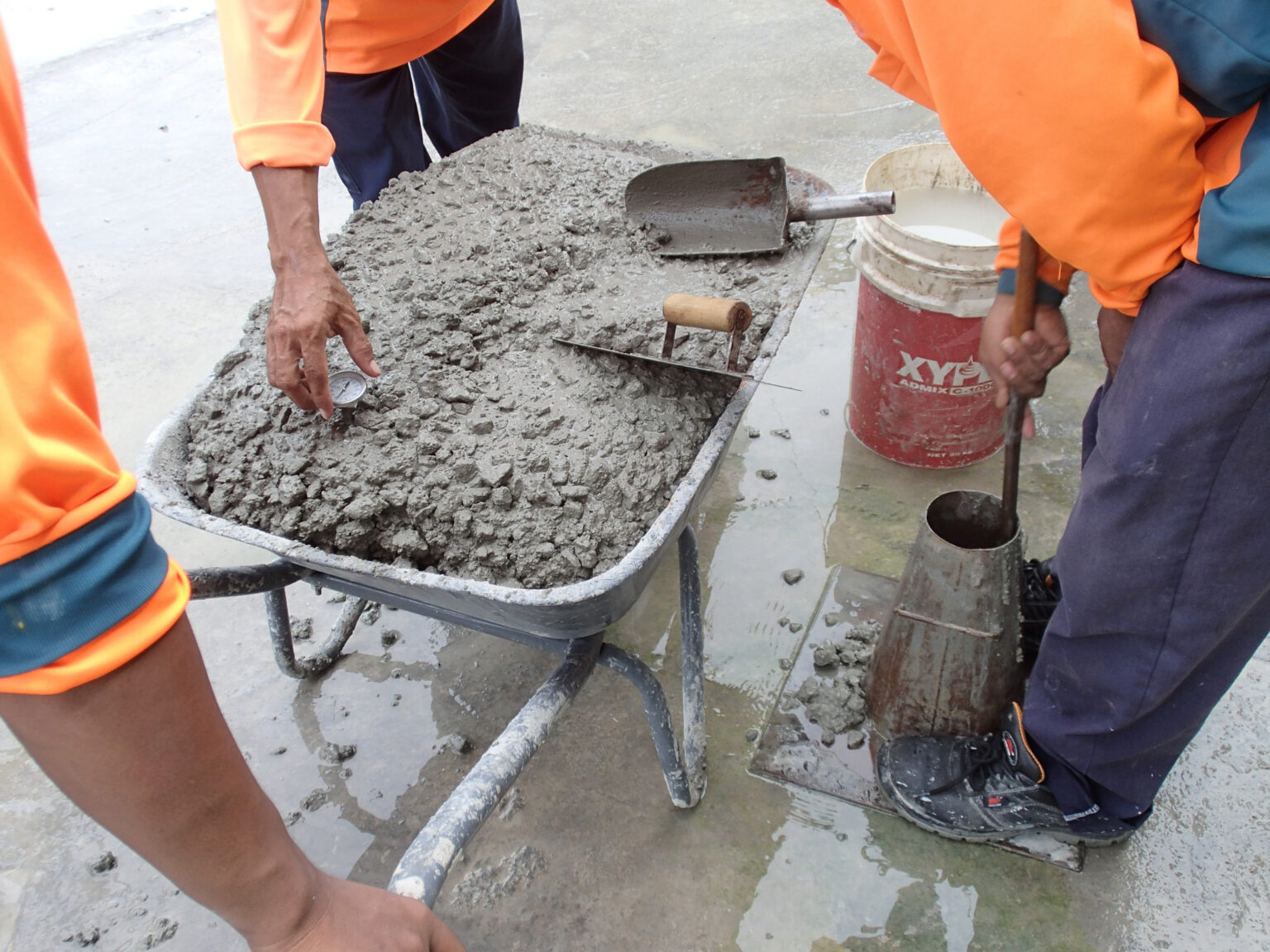
Fresh concrete field testing plays a critical role in identifying issues early and supporting compliance with project requirements. For technicians and inspectors working in the field, consistent execution of each testing step helps reduce risk, limit rework, and support reliable documentation throughout the testing process.
The first step in concrete field testing is capturing a representative concrete sample. Proper field sampling establishes the foundation for all subsequent field tests and helps reduce variability and risk in reported results.
ASTM References
C31 and C172
Materials Required
- Wheelbarrow or other non-absorbent container
- Shovel suitable for collecting and combining sample portions
Procedure
Concrete samples must be obtained in a manner that ensures they are representative of the batch being tested. At least two portions should be collected from the middle of the batch — after approximately 10% and before 90% of the load has been discharged. Because a single small portion may not represent the overall mixture, multiple portions are combined to minimize the risk of localized abnormalities.
Portions must be collected no more than 15 minutes apart. Sampling should be performed so that subsequent field testing can begin within required time limits after the final portion is collected. Each portion should be transported to the location where testing will be performed and combined using a shovel into a single, uniform sample.
Samples should be collected directly from the discharge mechanism of the mixer. The specific sampling method varies based on mixer type:
Stationary mixers:
Pass the sampling container through the discharge stream or divert the stream into the container.
Paving mixers:
Sample the concrete after it has been discharged. Collect at least five portions and combine them into a single sample. Take care to collect only the concrete being tested and avoid subgrade material or other contaminants. In some cases, multiple containers may be placed on the subgrade to catch discharged material and then combined into one sample.
Revolving drum truck mixers:
Pass the sampling container through the discharge stream or divert the stream into the container. Do not collect any portion until all water and admixtures have been added to the mix.
Continuous mixers:
Do not sample the first or last portions of the continuous discharge. After combining portions into a single sample, wait at least two minutes before proceeding, as mix water is added immediately prior to discharge in continuous mixers.
For all mixer types, samples must be protected from contamination and from environmental exposure such as sun, wind, or other conditions that may cause evaporation.
In rare cases involving concrete with large aggregate, wet sieving may be required prior to testing and molding. Because wet sieving alters the concrete, this condition should be noted when reporting test results.
Once the portions have been combined into a single, uniform, and protected sample, it is ready for the next steps in the concrete field testing workflow.
Forney Fact
Proper sampling is often overlooked in concrete field testing, yet small shortcuts or inconsistencies at this stage can multiply into larger issues later. Attention to detail during sampling helps reduce variability and supports more reliable results throughout the testing process.
In the next blog, we will explore step two in the workflow: measuring concrete temperature.