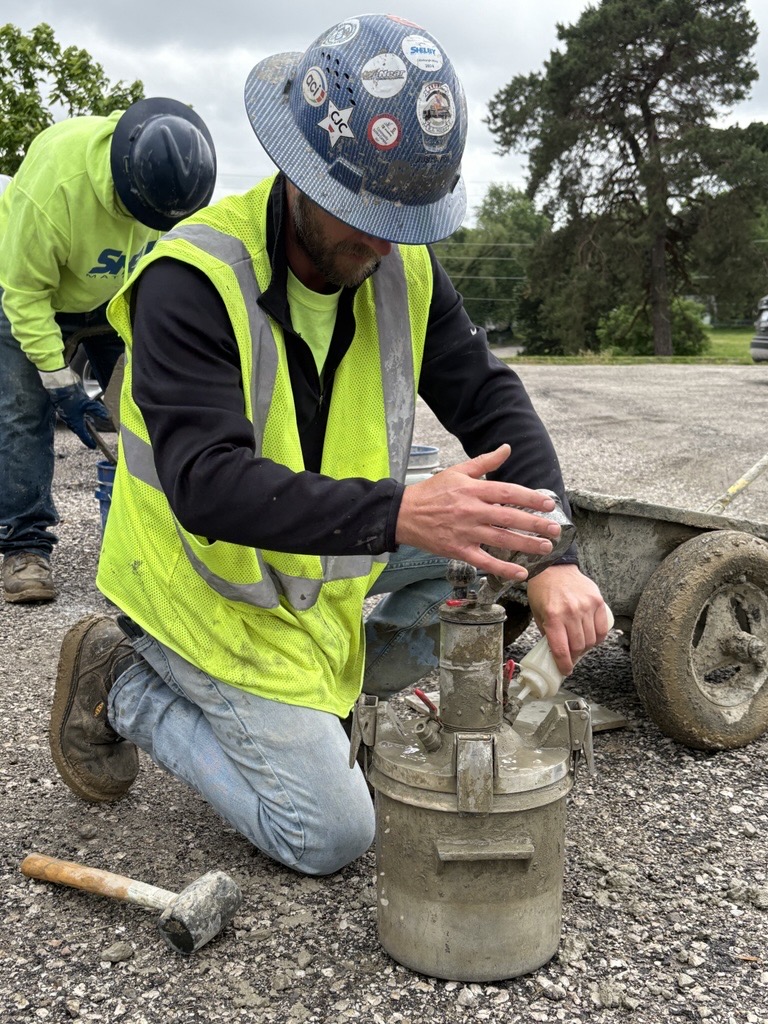
After weighing the concrete in an air meter bucket as part of determining the wet density of concrete, the next step in the field testing workflow may be performing an air content test. Since the bucket is already filled during the wet density test, that same bucket and concrete can be used here, saving some time by combining the two procedures.
Air content testing is especially important when concrete will be exposed to freeze-thaw conditions, where properly entrained air helps provide space for water to expand as it freezes. Without adequate air content, hardened concrete may be more susceptible to cracking and durability issues over time.
Air content is measured in fresh concrete using one of two ASTM methods, depending on the type of aggregate in the mix. The pressure method is typically used for normal-weight concrete, while the volumetric method is commonly used for concrete made with lightweight aggregate.
ASTM References
ASTM C231 or C173
Choosing the Correct Test Method
Pressure Method (ASTM C231)
 The pressure method is used for normal-weight concrete. It works by applying pressure to the air in the concrete sample and relating that pressure change to the amount of entrained air present.
Materials Required
- Concrete sample
- Scoop
- Type B air meter with calibrated pressure gauge
- Measuring bowl (watertight container of specified capacity)
- Cover assembly (with pressure gauge, air valves and petcocks)
- Air chamber
- Tamping rod
- Strike-off bar
- Rubber mallet
Procedure
Calibrate the air meter in accordance with the manufacturer’s instructions before use.
Moisten the inside of the measuring bowl. Fill the bowl with concrete in three equal layers. Rod each layer 25 times using the tamping rod. For the first layer, rod through the full depth of the concrete without striking the bottom of the bowl with excessive force. For the second and third layers, penetrate approximately one inch into the previous layer.
After rodding each layer, tap the sides of the bowl 10 to 15 times with the rubber mallet to help close voids and release trapped air. After the final layer has been rodded and tapped, strike off the surface with the strike-off bar so the concrete is level with the top of the bowl.
Clean the rim of the bowl to ensure an airtight seal, then attach and secure the cover assembly. Open the petcocks and keep the main air valve and bleeder valves closed.
Add water through one petcock until water flows from the opposite petcock, jarring the meter as needed to help remove trapped air. Once water flows steadily from the other petcock, pump the air chamber to the required initial pressure. Tap the gauge lightly to stabilize the needle.
Close both petcocks, then depress and hold the main air valve to release the air from the chamber into the measuring bowl. While holding the valve open, strike the sides of the bowl sharply to help stabilize the reading. Tap the gauge again if needed, then release the valve and read the air content to the nearest 0.1%.
Forney Fact
A pressure meter should not be used on concrete made with lightweight aggregate. Because lightweight aggregate can compress under pressure, using ASTM C231 in those cases can produce inaccurate results.
Volumetric Method (ASTM C173)
 The volumetric method is typically used for concrete containing lightweight or highly porous aggregate. This method uses water, isopropyl alcohol, and agitation to remove entrained air from the sample, with the resulting volume change used to determine air content.
Materials Required
- Volumetric air meter with calibrated measuring bowl and graduated top
- Funnel
- Scoop
- Tamping rod
- Rubber mallet
- Strike-off bar
- Isopropyl alcohol
- Water
Procedure
Moisten the inside of the measuring bowl before filling.
Fill the bowl with concrete in two equal layers. Rod each layer 25 times. For the first layer, rod through the full depth of the concrete without damaging the bowl. For the second layer, penetrate approximately one inch into the first layer.
After rodding each layer, tap the sides of the bowl 10 to 15 times with the rubber mallet to help release trapped air and close voids.
Strike off the concrete flush with the top of the bowl and clean excess concrete from the rim. Moisten the inside of the top section of the meter and clamp it in place.
Insert the funnel and add at least one pint of water. Add the amount of isopropyl alcohol needed to minimize foam in the neck. Then add additional water until the water level rises into the graduated neck. Remove the funnel and adjust the liquid level to the zero mark.
Attach the cap and begin the agitation sequence. Invert the meter, shake it horizontally, and return it upright in short intervals until the concrete is loosened from the bowl. Then tilt the meter to approximately 45 degrees and roll it back and forth while rotating it in increments, continuing long enough for the aggregate to move freely inside the meter.
Return the meter to an upright position, loosen the cap, and allow the air to stabilize. If the liquid level does not stabilize within 6 minutes, the test is invalid.
Record the reading, tighten the cap, and repeat the rolling process. After the second stabilization, if the reading has changed by no more than 0.25%, record that value as the final reading. If it changes by more than 0.25%, repeat the rolling procedure a third time.
If the reading still changes by more than 0.25% after the third cycle, the test is invalid. If foam rises above the allowable level, the test must also be discarded and repeated with additional alcohol. When more than the standard amount of alcohol is used, apply the appropriate alcohol correction from ASTM C173. The volumetric method uses water, alcohol, and agitation to remove entrained air and determine air content by observed volume change.
After the final reading is obtained, empty the meter and inspect the bowl. If significant undisturbed concrete remains inside, the test is invalid and should be repeated.
Forney Fact
Watch for leaks. If the meter is not sealed properly, the test result is not trustworthy — and air content is too important to guess at.
With air content verified and documented, the next step in the field testing workflow is recording and reporting results.