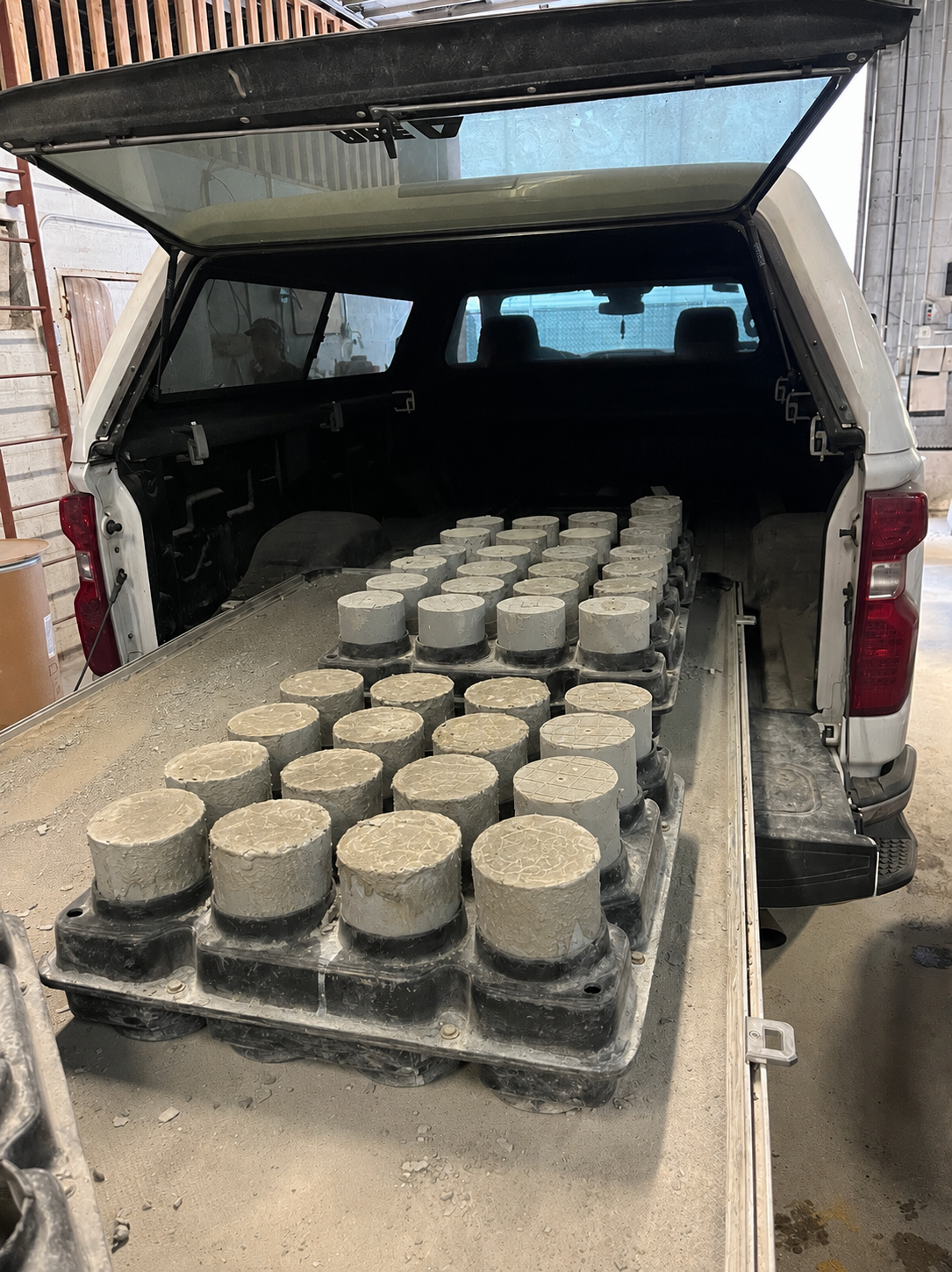
Cylinders that have been properly cast and carefully cured through the initial period are ready for the next step in the workflow, which is transportation to the laboratory.
While this step seems routine and maybe even simple, we feel it warranted its own focus, as it’s a vital step in the process.
Cylinders that are cast correctly, labeled properly and cured at the right temperature can still produce compromised results if they are loaded incorrectly, ride unsecured in the back of a truck or arrive at the lab damaged, disturbed or mislabeled.
This guide covers the requirements and best practices for transporting concrete test cylinders from the jobsite to the testing laboratory.
ASTM Reference
ASTM C31/C31M
Materials Required
- Cylinder transport rack
- Cushioning material
- Secure strapping for the transport vehicle
- Cylinder lids or covers (already in place from initial curing)
- Chain-of-custody documentation
- Personal protective equipment for handling concrete specimens
When Cylinders Are Ready to Transport
Standard-cured cylinders may be transported to the laboratory after the initial curing period. ASTM C31/C31M allows transportation of specimens after they have hardened sufficiently to resist damage during transport, which typically occurs within 24 hours of casting.
If the concrete is still in a plastic or semi-plastic state, the cylinders should not be transported. Moving a specimen too early can introduce micro-cracking or internal disturbance that affects hardened strength results without leaving any visible evidence on the surface of the cylinder.
Timing Relative to Initial Curing
For most standard-cured specimens, transport should occur as soon as possible after the initial curing period. Leaving cylinders on the jobsite for too long introduces risks like exposure to vibration from construction activity, temperature changes, accidental damage or the issue of a cylinder getting moved or misplaced.
ASTM C31/C31M requires that cylinders be delivered to the lab within 48 hours of initial curing.
Protecting Cylinders During Transport
The primary concerns during transport are vibration, impact, tipping and temperature exposure. All four of these can affect test results. And even minor factors, like a truck headed down a recently stripped road or hitting a large pothole, can directly affect the specimen.
Cylinders should be:
- Transported upright (never laid down)
- Secured individually or placed in a transport rack (never a box or container that could cause the specimens to move around)
- Cushioned in-between cylinders (foam or rubber matting can be used)
- Kept at the right temperature:
- ASTM C31/C31M requires that standard-cured cylinders be maintained between 60°F and 80°F during transport.
- For concrete with a specified strength of 6,000 psi or greater, the required range tightens to 68°F–78°F.)
- Coolers or other insulated containers may be used, if necessary.
- To prevent freezing, the cylinders can be transported in the heated cab of a vehicle.
- Protected from moisture loss by:
- Wrapping the specimens in plastic or wet burlap
- Surrounding them with wet sand
- Using tight fitting caps on plastic molds
Handling Cylinders and Chain-of-Custody
Cylinders should be handled carefully through each step. They should always be lifted from the base and never carried by the lid. They should not be dropped or rolled, as they can crack, and testing will be invalid. Transportation time should not exceed four hours.
Once in the lab, cylinders should be transferred directly into the designated curing area. They should also arrive with the proper documentation so tests can be validated with confidence.
Forney Fact
Be consistent. Quality comes from the ability of knowing exactly what happens to a specimen through each step. We will dig into that in detail in our next blog of the concrete testing workflow series, which will cover recording and reporting results of specimen testing.